
Pergola Construction & Design in Dubai
Leading Pergola Construction & Pergola Contractors in Dubai
Service Introduction
Al Warda Al Suoda Landscape Gardening L.L.C. designs and builds pergolas for Dubai villas, gardens, and outdoor spaces, covering initial design and site consultation through to full construction and installation. Whether you want a simple garden shade structure or a more complex outdoor living area with seating, lighting, and landscaping integration, we can discuss your requirements and deliver a pergola suited to your property and how you intend to use it.
If you are looking for the best pergola construction company in Dubai. Call now: +971 56 900 2388
What Is a Pergola?
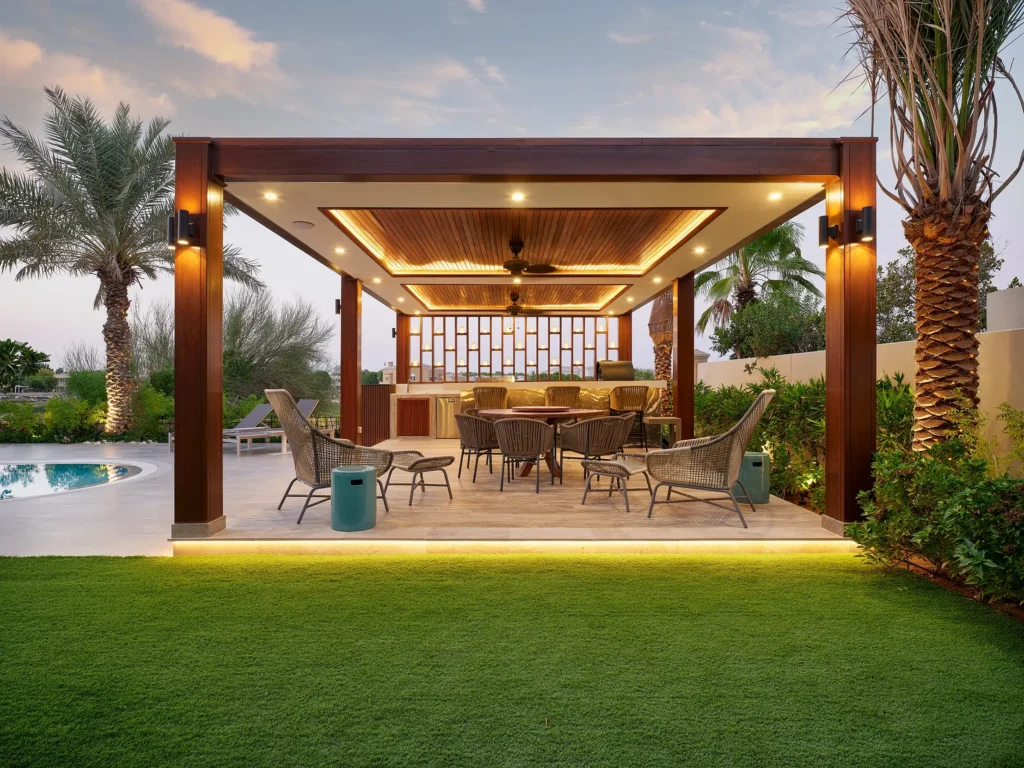
A pergola is a freestanding or attached outdoor structure, typically consisting of a frame with a roof or shade system, used to define, cover, and enhance an outdoor living area. In Dubai’s residential context, a pergola most commonly provides shade over a garden seating area, poolside terrace, outdoor dining zone, or garden walkway, turning an exposed outdoor space into one you can use comfortably for much of the year.
Pergolas vary considerably in design, material, and roofing system. A basic garden pergola might use an open lattice frame to support climbing plants or a fabric shade. A more advanced structure uses aluminium with a louvred or bioclimatic roof system that can be opened or closed to control shade, ventilation, and weather protection. The right pergola for any property depends on the available space, how it will be used, and what the user wants from the structure.
Pergola Design in Dubai
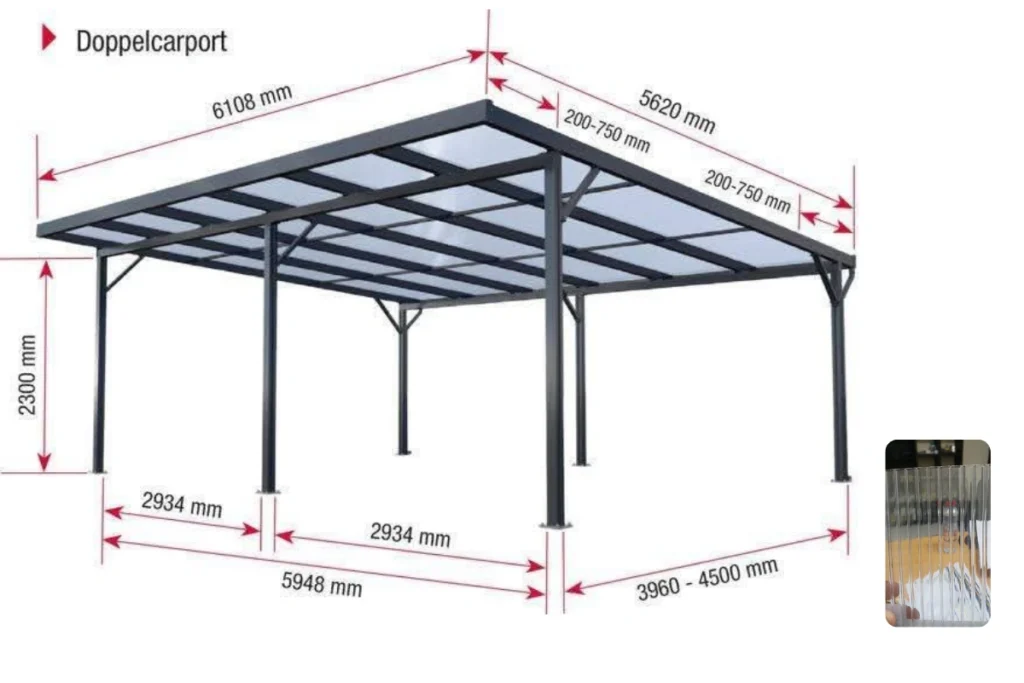
A pergola design that works well in Dubai has to resolve more than just aesthetics. Dubai’s climate means that outdoor structures must be oriented and configured with direct sun exposure in mind, a pergola positioned without considering where the afternoon sun falls and how air moves through the structure can become uncomfortable to use during the periods when shade is most needed.
Design considerations for a Dubai pergola include:
Sun orientation: Identifying which direction the sun tracks across the outdoor space at different times of day, and positioning the pergola’s coverage to deliver shade when and where it is most needed.
Airflow: A pergola that encloses an area without allowing air movement can concentrate heat beneath it rather than providing relief from it. The design should account for prevailing breeze direction and allow ventilation through and under the structure.
Available space and garden layout: The pergola’s dimensions and position should integrate with the existing or planned garden, working alongside planting, paving, a pool, or other outdoor features rather than simply being placed wherever space permits.
Intended use: A pergola for daily outdoor dining requires different dimensions, access, and shade quality than one used for occasional relaxation or as a garden focal point.
Material selection: The choice between aluminium and wood has significant implications for appearance, maintenance requirements, and long-term performance in Dubai’s outdoor conditions.
Integration with the villa architecture: An attached or wall-mounted pergola reads as part of the property rather than an addition to it when the materials, colours, and proportions are chosen to complement the building.
Optional features: Integrated lighting, side screens, fans, or louvred roofing systems can all be included in the design from the outset, rather than added later.
Pergola Construction in Dubai
Pergola construction covers the full process from confirmed design through to a completed, installed structure, site preparation, fabrication or material sourcing, frame assembly, roof or shade system installation, and finishing.
The construction process for a pergola in Dubai typically involves:
Design confirmation: The final design, dimensions, materials, and features are agreed upon before fabrication or installation begins.
Site preparation: Ground conditions, existing surfaces, and foundation or fixing requirements are assessed and prepared. A freestanding pergola requires appropriate ground anchoring; a wall-mounted structure requires assessment of the fixing surface.
Frame construction and installation: The main structural frame, posts, beams, and cross-members are assembled and installed on site or partly prefabricated and assembled in place.
Roof or shade system installation: The roofing component, whether a fixed aluminium panel, louvred system, glass, retractable fabric, or open lattice — is fitted to the frame and secured.
Finishing: Edge treatments, connection points, drainage elements (where applicable), and any integrated features (lighting tracks, screen channels) are completed.
Inspection: The completed structure is checked for stability, finish quality, and correct operation of any adjustable components.
The specific process varies by pergola type and design complexity. A freestanding garden pergola with a fixed roof is simpler to construct than a motorised bioclimatic louvred system with integrated lighting and drainage.
Pergola Installation in Dubai
Pergola installation covers the on-site work involved in erecting and securing the structure at the property. For many aluminium pergola types, fabrication is completed off-site before installation begins, meaning the on-site phase is primarily assembly and securing.
Key elements of pergola installation include:
Accurate site measurement: Measurements taken at the site confirm dimensions, ensure the structure fits correctly within the available space, and identify any site-specific constraints affecting installation.
Ground and fixing preparation: Footings, anchor points, and wall fixings are prepared to the specification required by the structural design.
Frame installation: Posts are positioned and secured; the structural frame is assembled and checked for level and alignment before any roof components are fitted.
Roof or shade component fitting: The roof panels, louvres, or fabric shade is fitted to the frame and adjusted for correct drainage or operation where applicable.
Integration of optional features: Lighting, side screens, fans, or other features included in the design are installed and connected.
Testing and final inspection: For motorised systems, operation is tested and adjusted. The completed installation is inspected for finish quality and structural soundness.
As a general industry reference, a standard custom pergola installation in Dubai typically takes between one and three days on-site for most residential projects after fabrication is complete, with the total lead time from design confirmation varying by complexity and the fabrication requirements of the chosen system. This is a general reference from published UAE industry sources, not a guaranteed Al Warda timeline. Your specific project timeline will be discussed during the consultation.
Pergola Types
Aluminium Pergola Dubai
Aluminium is the most widely specified pergola material in Dubai. It is resistant to corrosion, UV degradation, and heat expansion that can affect other materials in the UAE outdoor environment. Powder-coated aluminium finishes are available in a range of colours, allowing the structure to be matched to the property’s exterior. An aluminium pergola is low-maintenance, it does not require the periodic treatment or repainting that a wooden pergola needs in Dubai’s climate, though it still benefits from periodic cleaning and inspection.
Aluminium pergolas are available as fixed-roof systems, bioclimatic/louvred systems, glass-roof systems, and framed structures with open or fabric roofing, covering the full range of design requirements from a simple shade structure to a sophisticated outdoor room.
Bioclimatic & Louvred Pergola Dubai
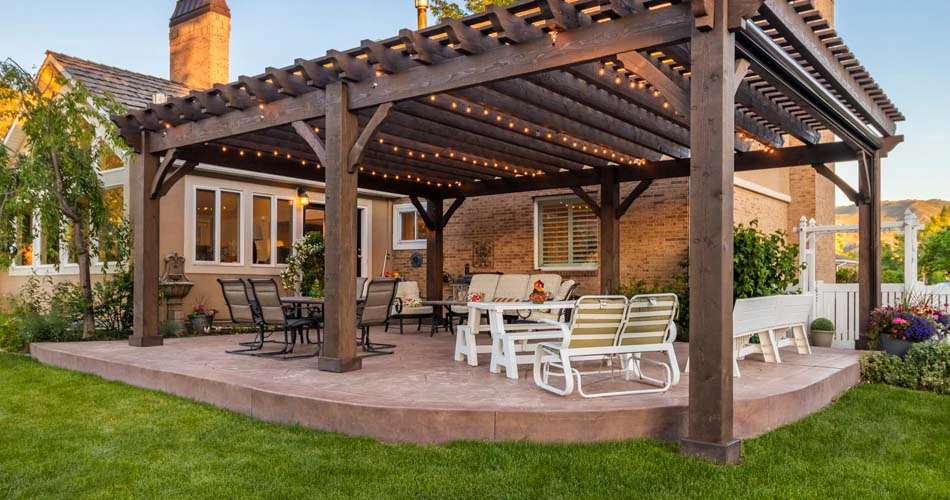
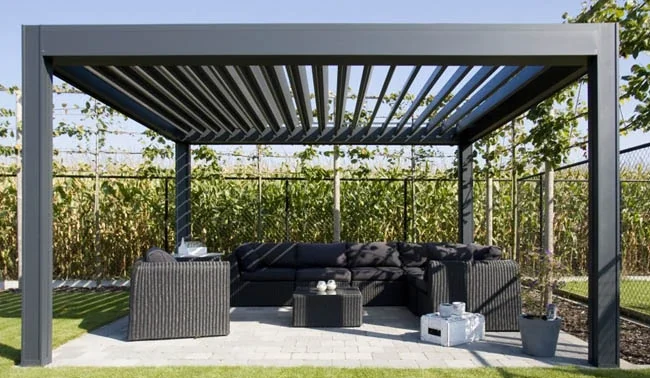
A bioclimatic pergola, also referred to as a louvred pergola, uses adjustable aluminium louvres in the roof that can be rotated between open and closed positions. Open louvres allow air to circulate and sunlight to filter through; fully closed louvres provide shade and, in some designs, rain protection with drainage routed through the frame and posts. Motorised versions allow the louvre angle to be adjusted remotely or automatically in response to weather conditions.
A bioclimatic system provides significantly more control over the outdoor environment than a fixed-roof pergola, allowing the space to be open and breezy when conditions allow and fully shaded or covered when needed. This makes it well-suited to Dubai’s varied conditions across the year.
Wooden Pergola Dubai
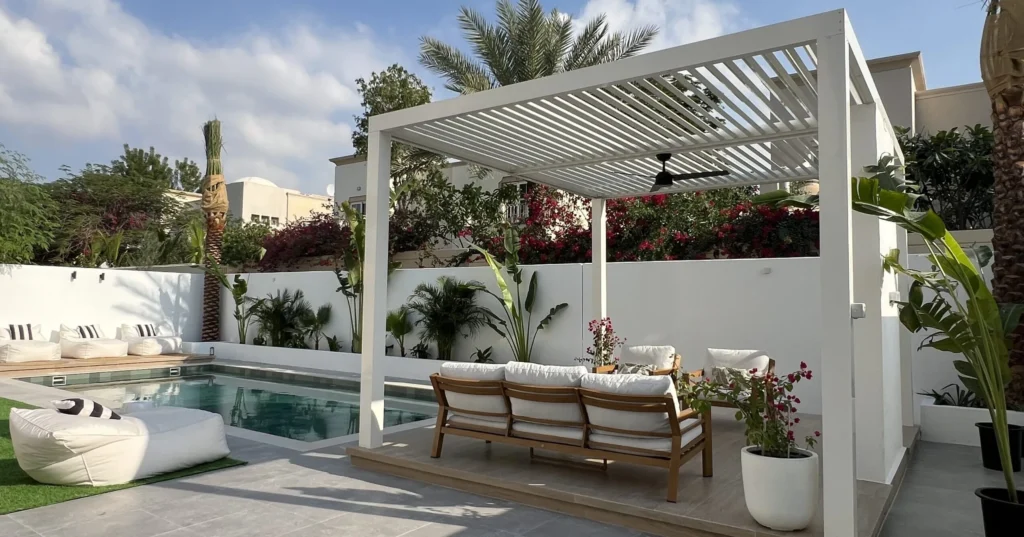
A wooden pergola offers a natural aesthetic that suits gardens and outdoor spaces where a warmer, more organic visual character is desired. In Dubai’s climate, wooden pergolas require consistent maintenance, regular application of a UV-resistant oil, sealant, or treatment to prevent drying, cracking, and UV degradation from the intense UAE sun. Untreated or inadequately treated timber in Dubai’s outdoor conditions deteriorates relatively quickly, making maintenance planning an essential part of the decision to use wood.
A wooden pergola may be appropriate where the natural appearance is specifically desired, and the property owner is committed to a consistent maintenance programme.
Freestanding & Wall-Mounted Pergolas
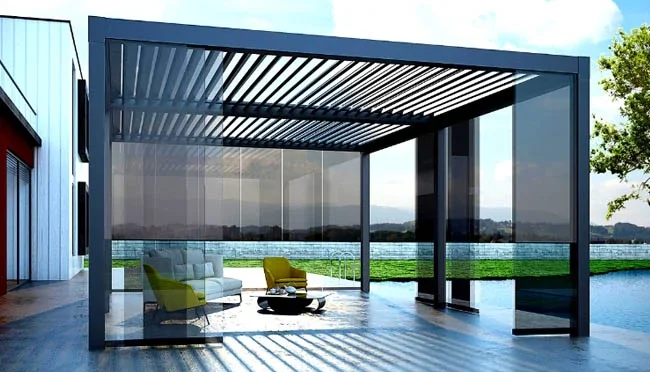
A freestanding pergola stands independently in the garden on its own posts, it can be positioned anywhere in the outdoor space and does not require fixing to the building. A wall-mounted (or attached) pergola connects to the villa wall, typically over a terrace, patio, or door area adjacent to the building, using the wall as one of its structural supports. The choice between freestanding and wall-mounted depends on the intended location, the design intent, and the structural requirements of the property.
Aluminium vs Wooden Pergola - Which Is Right for Dubai?
The choice between aluminium and wood is one of the most common decisions in a Dubai pergola project. Both materials are used across the city’s villa communities, and both have different strengths.
|
Feature
|
Aluminium Pergola
|
Wooden Pergola
|
|---|---|---|
Neither material is universally better, the right choice depends on the property’s design, the owner’s maintenance preference, and the intended use of the outdoor space.
Garden Pergola Construction Dubai
A garden pergola provides shade and structure within a villa garden, defining an area for outdoor dining, relaxation, or entertaining, and giving the garden a focal point that it might otherwise lack. In Dubai villa gardens, a pergola positioned over a dining or seating area can effectively extend the usable hours of that space, providing relief from direct sun during the day and a comfortable, defined environment for evening use with appropriate lighting.
Garden pergolas can be freestanding within the garden or positioned against a boundary wall. Freestanding designs integrate naturally with surrounding planting, climbing plants can be trained up the structure’s frame if desired, softening its appearance and adding to the garden’s overall composition.
The pergola’s dimensions should be proportionate to the garden’s scale and the seating area it covers, large enough to be genuinely useful and comfortable, but not so dominant that it overshadows the rest of the outdoor space.
Villa Pergola Design & Construction Dubai
Villa pergola projects in Dubai frequently involve the backyard or rear garden area, creating a shaded outdoor living zone for the household that can be used comfortably for a significant part of the year. Common villa pergola locations include:
Backyard and rear garden: Covering an outdoor seating or dining area adjacent to the villa’s living space, often with access directly from the house.
Poolside area: Positioned alongside or at one end of the swimming pool to provide shade over lounging or seating areas, keeping the poolside comfortable during the hottest hours of the day.
Side garden or courtyard: Where a side passage or enclosed courtyard lends itself to a covered outdoor space.
Rooftop or upper terrace: For villas with accessible flat roof areas or elevated terraces where outdoor space is available but currently without shade.
A villa pergola is most effective when it is designed as part of the overall garden plan, with the surrounding paving, planting, lighting, and pool surrounds considered alongside the pergola structure itself, rather than designed independently and combined later.
Backyard Pergola Dubai
The villa backyard is typically the primary outdoor living space for a Dubai household, and a pergola is one of the most impactful additions to a backyard that is currently underused because of direct sun exposure. A backyard pergola creates a defined, shaded zone that the family can use comfortably during the day and that works equally well for evening entertaining when paired with appropriate lighting.
A backyard pergola typically covers:
Outdoor dining area: Seating for family meals outdoors, protected from direct sun and positioned for convenient access from the kitchen or dining room.
Outdoor seating and relaxation zone: A lounge or daybed area shaded for afternoon use.
Entertainment area: An outdoor space for hosting guests, which may also include a BBQ kitchen or outdoor cooking station adjacent to or integrated within the pergola’s covered zone.
Transition from interior to garden: A covered area bridging the interior living space and the open garden, effectively extending the usable indoor-outdoor flow of the property.
Pergola for Front Garden
A pergola in a front garden is less common than a backyard installation but can be appropriate in certain designs, particularly where a covered entrance walkway, an entrance canopy, or a defined outdoor seating area at the front of the property is part of the design brief.
Front garden pergola applications are most effective when the structure contributes to the entrance composition as a whole, framing the approach to the front door, providing shade over a seating area that faces the garden rather than the street, or defining a covered walkway between the gate and the entrance.
The design should be proportionate to the property’s front elevation and consistent with the materials and style of the villa, a well-integrated front pergola enhances the property’s street presence; one that is oversized or stylistically mismatched can create the opposite effect.
Pergolas for Outdoor Living
Dubai’s climate is genuinely comfortable for outdoor living for approximately seven to eight months of the year, and a well-designed pergola extends that window further by providing shade and shelter that makes the outdoor space usable on days when direct sun would otherwise make it impractical. A pergola used in combination with integrated lighting also opens the outdoor space for evening use during the summer months, when ambient temperatures after sunset are often the most comfortable of the day.
Outdoor living applications for pergolas include:
Outdoor dining: A dining table and chairs under a covered structure, accessible from the kitchen or living room, for daily family use or entertaining.
Relaxation area: Day beds, outdoor sofas, or garden chairs in a shaded zone that can be used during the day without direct sun exposure.
Entertaining area: A covered outdoor space with seating, lighting, and space for guests — with or without an adjacent cooking area.
Garden focal point, A pergola as an architectural element within the garden that gives the outdoor space structure and a sense of arrival, whether or not it is occupied.
Pergola with Landscaping
A pergola is most effective when it is designed and built as part of a wider garden environment, not placed into an outdoor space as an isolated structure. Al Warda Al Suoda offers the full range of landscaping services alongside pergola construction, which means the pergola and the outdoor environment around it can be planned and delivered together.
Elements that work naturally alongside pergola construction include:
Paving and flooring: The hard surface beneath and around the pergola, porcelain tiles, interlock, natural stone, or another material appropriate to the design, planned in connection with the structure’s footprint and access routes.
Garden planting: Planted borders around or adjacent to the pergola, and where desired, climbing plants trained on the frame structure.
Artificial or natural grass: Lawn areas framing the pergola or occupying the garden beyond the covered zone, coordinated with the overall garden design.
Irrigation: Automated irrigation for any planted areas surrounding or adjacent to the pergola.
Garden LED lighting: Pathway lighting approaching the pergola, accent or ambient lighting within the structure, and feature uplighting on nearby planting.
Outdoor BBQ kitchen: Where an outdoor cooking and entertaining area is part of the project brief, an outdoor BBQ station or kitchen can be incorporated within or adjacent to the pergola.
Pergola Lighting
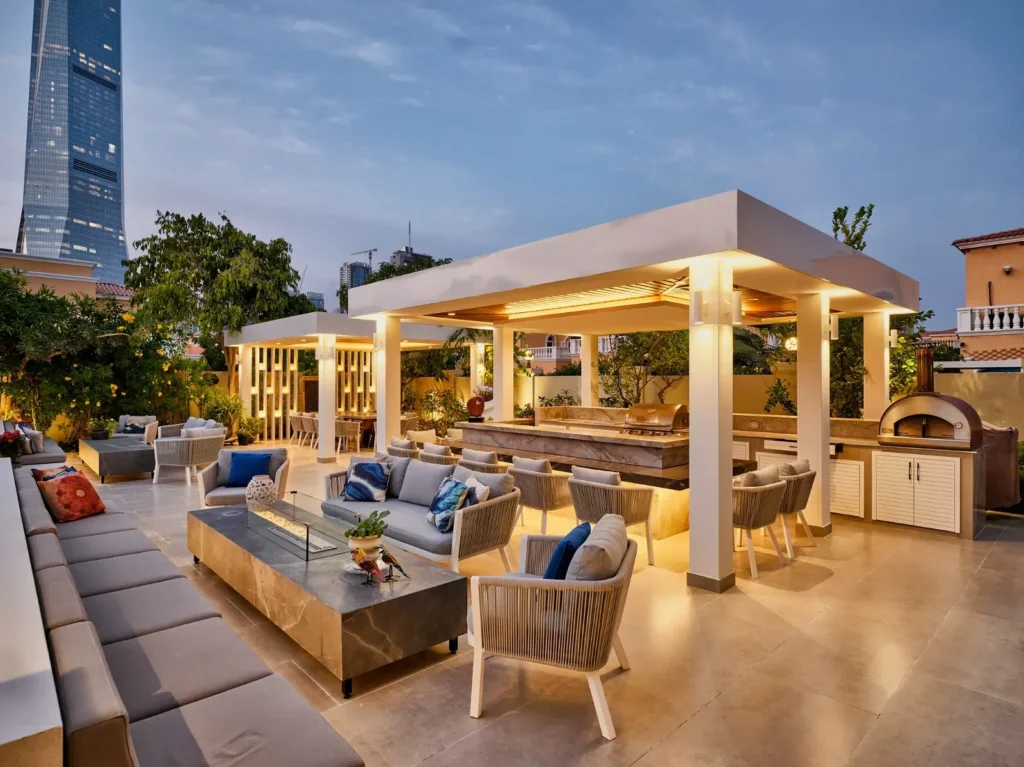
Lighting is one of the most effective design additions to a pergola project. Integrated lighting allows the outdoor space to be used comfortably in the evening, when Dubai’s temperatures are often the most pleasant, and gives the structure a very different character after dark from its daytime appearance.
Pergola lighting options, as referenced in the Dubai outdoor living industry, include:
LED strip lighting: Fitted along beams or the underside of the roof structure, providing diffuse, ambient illumination across the covered area.
Spotlights or downlights: Directional fixtures integrated into the roof structure pointing down onto the seating or dining area.
Feature uplighting: Positioned at the base of posts or adjacent planted material, uplighting adds drama and depth to the structure at night.
Pathway and step lighting: Guiding movement to and from the pergola through the garden, particularly where steps or level changes are involved.
Lighting is typically incorporated as an optional design feature within the initial pergola project, included from the outset where the client requires it, which avoids retrofitting through a completed structure later.
Pergola Shading Options
The roof or shade system is the element of a pergola design that most directly determines how useful and comfortable the covered space is in Dubai’s conditions. Shading options referenced across the Dubai market include:
Fixed roof: Solid aluminium panels, insulated roof sheets, or glass providing continuous shade and weather protection over the covered area. No adjustment; consistent protection.
Bioclimatic/louvred roof: Adjustable aluminium louvres that rotate between open and closed positions, allowing the user to control the degree of shade, ventilation, and in some systems rain coverage. Motorised versions are adjustable remotely. Hidden drainage channels within the frame carry away rainwater when the louvres are closed.
Open lattice: A traditional pergola frame without a solid roof, allowing climbing plants to be trained over the structure and providing partial, dappled shade as the planting grows.
Retractable fabric or canvas: A fabric shade system that extends and retracts, providing shade when deployed and an open structure when retracted. Less permanent than a fixed or louvred aluminium system.
Glass roof: Allows light through while providing protection from rain and UV exposure. Suitable where a bright, light-filled outdoor space is desired.
The appropriate shading system depends on the intended use, the degree of weather protection required, the property’s design language, and the budget. Al Warda Al Suoda can discuss the options that best suit your project during a site consultation.
Pergola Maintenance in Dubai
Pergola maintenance requirements vary by material and design. A maintenance plan appropriate to the structure helps protect the investment and ensures the pergola performs as intended over time.
Aluminium pergola maintenance:
- Periodic cleaning and washing down the aluminium frame and roof components to remove dust, salt, and environmental residue. Dubai’s dusty conditions mean this is a more frequent consideration than in other climates.
- Inspection of fixing points and connections, checking structural fixings, particularly at post bases and wall anchor points, for any movement or corrosion at contact points.
- Louvre and moving component inspection for bioclimatic systems, checking that louvre mechanisms, motors (where applicable), and drainage channels are operating correctly and are free from blockage.
- Surface condition check, assessing the powder-coat finish for any areas of damage or degradation that may benefit from touch-up treatment.
Wooden pergola maintenance:
- Regular application of UV-resistant oil, timber sealant, or treatment, typically required annually or more frequently in Dubai’s intense UV and heat conditions, to prevent drying, cracking, and surface degradation.
- Inspection of joints and connection points for any movement or water penetration.
- Cleaning of the wood surface to remove algae, dust, and accumulated residue.
- Assessment of any areas showing deterioration for early remediation before they require more significant repair.
Both material types benefit from periodic professional inspection, identifying any issues early, before they develop into structural problems or expensive repairs.
Pergola Repair & Fixing
For properties with an existing pergola that requires attention, Al Warda Al Suoda can discuss the specific issues and assess what remediation is needed.
Pergola problems that may indicate a need for inspection or repair include:
- Loose or unstable structural components
- Visible corrosion at fixing points or connections
- Louvre mechanism or motor faults in motorised systems
- Damage to roof panels, glass, or fabric components
- Surface deterioration on wooden frames
- Drainage blockage in louvred systems causing water pooling
- Movement at post bases or wall fixing points
Whether the issue is a minor fix or a more significant structural concern, an assessment of the existing structure is the starting point for understanding what is involved.
Pergola Construction Process
The following represents a general construction and installation process for a pergola project. The specific steps and their sequence vary by structure type, design complexity, and site conditions.
Step 1: Site Consultation
The outdoor space is assessed, dimensions, existing surfaces, access, sun orientation, and proximity to other garden features, and your design requirements, material preferences, and intended use are discussed.
Step 2: Design & Specification
A design is prepared, covering the structure’s dimensions, position, material, roof or shade system, and any optional features (lighting, screens, etc.). This is presented for your review before any fabrication or installation work begins.
Step 3: Written Quotation
A written, itemized quotation covering scope, materials, timeline, and relevant terms is provided. No work proceeds without written agreement.
Step 4: Site Preparation
Fixing points, foundations, and any ground preparation required for the pergola’s structural support are addressed.
Step 5: Frame Installation
Posts, beams, and the main structural frame are installed and secured, checked for level and alignment.
Step 6: Roof & Shade Installation
The roof or shade system, panels, louvres, glass, or fabric, is fitted to the frame, and any drainage or operational components are installed and adjusted.
Step 7: Optional Feature Installation
Lighting, side screens, and any other design features are installed and commissioned.
Step 8: Inspection & Handover
The completed structure is inspected with you, checking finish, stability, and correct operation of all components before the project is formally complete.
Pergola Cost in Dubai
Pergola costs vary considerably depending on size, material, roof type, design complexity, and any additional features, and no meaningful price can be given without a site assessment and a design brief. The following general market ranges from published UAE sources provide context for budget planning:
|
Pergola Type Material
|
Cost Range
|
Included & Design
|
|---|---|---|
|
Fixed aluminium pergola
|
AED 600–1,500 per sq.m (standard fixed-roof systems)
|
Supply & Installation
|
|
Motorised/bioclimatic aluminium
|
AED 2,000–3,500+ per sq.m (depending on specification)
|
Supply & Installation
|
|
Wooden pergola
|
AED 800–1,500 per sq.m
|
Supply & Installation
|
|
Standard residential aluminium installation (total)
|
AED 25,000–50,000 (most residential projects)
|
Supply & Installation
|
|
Basic 20 sq.m aluminium installation (total)
|
AED 15,000–30,000
|
Supply & Installation
|
Key cost factors:
- Size: the primary driver; larger structures require more material and installation time
- Material: aluminium, wood, or WPC each have different material and fabrication costs
- Roof system: a fixed panel roof is less complex and typically less expensive than a motorised louvred system
- Optional features: integrated lighting, side screens, fans, motorised components, and remote control systems all add to the total
- Site conditions: the existing ground surface, access, and any structural requirements at the fixing points affect preparation costs
- Design complexity: a simple rectangular structure is more straightforward to fabricate and install than a bespoke shape or multi-level design
- Integration with landscaping: paving, planting, or other landscape work included alongside the pergola is additional scope
All pricing references above are from published UAE third-party sources and represent general market ranges, not Al Warda Al Suoda-specific pricing. Your project is priced individually following a site assessment and agreed design.
Important note on permits and approvals: Some permanent outdoor structures may be subject to approval requirements from relevant authorities or from the master developer of the community in which the property is located. Homeowners should verify what approvals, if any, apply to their specific property before construction begins. Al Warda Al Suoda recommends discussing this during the initial consultation.
How to Choose a Pergola Company in Dubai
Design capability: Can the company produce a proper design showing how the pergola will look in your outdoor space before any work begins? A clear design allows you to approve the result before it is built, not after.
Material knowledge: Does the company explain the practical implications of different materials in Dubai’s climate, not just offer a price for aluminium and wood, but explain what each means in terms of maintenance, performance, and appearance in the UAE’s specific conditions?
Written quotation: A written, itemized quotation covering all materials, installation, optional features, and timeline is the standard for any reputable contractor. A verbal quote or a single lump-sum figure is not an appropriate basis for a structural installation.
Site assessment before quoting: A pergola cannot be meaningfully quoted without visiting the site, assessing dimensions, existing surfaces, sun orientation, and any specific constraints. Any company providing a fixed price without a site visit is quoting without the information needed to quote accurately.
Integration capability: If you are planning wider garden works alongside the pergola (paving, planting, irrigation, lighting), working with a company that provides all of these services simplifies the project significantly. One company responsible for the full scope avoids the coordination and accountability problems that arise from managing multiple contractors across a single outdoor project.
Maintenance support: Can the company provide ongoing maintenance for the structure after installation? This is particularly relevant for wooden pergolas, which require consistent periodic treatment in Dubai’s climate.
Genuine project examples: Completed project photographs, ideally in Dubai’s own villa communities, are the most direct evidence of what a company actually delivers.
Dubai-Specific Considerations
A pergola designed and built for Dubai’s outdoor environment has to account for conditions that are more demanding than those in cooler, more temperate climates.
Heat and sun intensity: Dubai’s summer months bring temperatures exceeding 45°C and intense UV radiation. Materials must be specified for heat stability and UV resistance; designs must genuinely deliver shade rather than simply defining a covered area that reflects heat downward.
Airflow: In Dubai’s summer, airflow makes a significant difference to comfort levels beneath a covered structure. A pergola designed without considering prevailing wind direction and allowing adequate ventilation can become a heat trap, uncomfortable precisely when shade is most needed. The orientation of the structure and the openness of its sides should account for this.
October to April installation window: Dubai’s cooler season (October–April) is the most practical period for construction work and for the initial establishment of any planted material adjacent to a new structure. Commercial demand for pergola installation is highest during this period; planning and confirming projects early in the season secures preferred scheduling.
Coastal properties: Villas in coastal communities, Palm Jumeirah, Dubai Marina, JBR experience higher humidity and salt-laden air. Aluminium pergolas are well-suited to coastal environments; wooden pergolas require particularly consistent treatment in these conditions.
Garden and landscape integration: A pergola in a Dubai villa garden reads as a coherent part of the outdoor environment when the surrounding paving, planting, and lighting are designed alongside it, not added separately later.
Areas We Serve
Al Warda Al Suoda provides pergola construction and design services across Dubai’s major villa communities:
Emirates Hills, Arabian Ranches, Dubai Hills Estate, Al Barari, Palm Jumeirah, Jumeirah Golf Estates, Damac Hills, The Meadows & The Springs, Mohammed Bin Rashid City, Jumeirah Islands, Meydan & Sobha Hartland, Jumeirah (JVC, JVT, JBR), and surrounding villa communities across Dubai.
Contact us if your community is not listed, we cover villa pergola projects across Dubai.
Frequently Asked Questions
A pergola is an outdoor structure, typically a frame with a roof or shade system, used to define and cover an outdoor living area. In Dubai villa gardens and terraces, pergolas most commonly provide shade over seating, dining, poolside, or entertaining areas, making the outdoor space more comfortable and usable.
Pergola construction covers the design, fabrication, and on-site installation of the structure, including site assessment, design planning, material and roof system selection, frame installation, shade or roof fitting, and any optional features (lighting, screens, drainage). The specific scope depends on the design and the chosen pergola type.
Pergola costs depend on size, material, roof type, and any additional features. Published UAE market data indicates general ranges of AED 600–1,500 per sq.m for standard fixed aluminium systems and AED 2,000–3,500+ per sq.m for motorised/bioclimatic systems, with total residential project costs commonly ranging from AED 15,000 to AED 50,000+ depending on scope. Al Warda Al Suoda provides written quotations after a site assessment, your specific project is priced based on actual design and conditions, not a generic estimate. All market ranges above are third-party data from published UAE sources, not company pricing.
The most commonly used materials for Dubai pergolas are aluminium and wood. Aluminium is widely specified for its durability, low maintenance, and heat resistance in the UAE climate. Wood offers a natural aesthetic but requires consistent maintenance in Dubai’s outdoor conditions. WPC (wood-plastic composite) is also available, providing a timber-like appearance with lower maintenance demands.
Yes, aluminium is well-suited to Dubai’s climate. It is resistant to corrosion, does not warp or crack in the heat, and powder-coated finishes are UV-stable. Aluminium pergolas are the most widely installed type in Dubai’s residential communities.
Aluminium pergolas offer lower maintenance, strong durability in Dubai’s climate, and a clean contemporary appearance. Wooden pergolas provide a warm, natural aesthetic but require regular UV treatment or sealant to perform well in the UAE’s heat and sun intensity. The right choice depends on the property’s design and the owner’s maintenance preference.
A bioclimatic pergola uses adjustable aluminium louvres in the roof structure that can be rotated between open and closed positions, allowing control over shade, ventilation, and, in some designs, weather protection. Motorised versions allow remote or app-based adjustment. This type of system provides more environmental control than a fixed-roof pergola.
Yes, villa garden pergola installation is a common project type. The structure can be positioned as a freestanding feature within the garden, over a defined seating or dining area, adjacent to the pool, or attached to the villa building where appropriate.
Yes, integrated LED lighting is a design option that can be incorporated within the pergola structure from the outset. Lighting extends the usable hours of the outdoor space and gives the pergola a different character in the evening.
Yes, we can discuss maintenance and repair requirements for pergola structures. Maintenance needs vary by material and roof type; wooden pergolas require more consistent periodic treatment than aluminium in Dubai’s climate.
Requirements vary depending on the property type, the community, and the nature of the structure. We recommend homeowners verify what approvals, if any, apply to their specific property before construction begins. This is best discussed during the initial consultation.
Contact us by phone (+971 56 900 2388), WhatsApp (+971 56 900 2388), or email (contact@alwardalandscaping.com) to arrange a site consultation. We will assess your outdoor space, discuss your design requirements, and provide a written quotation.
Our Related Services
- Villa and House Pergolas
- Front-yard & Backyard Pergola
- Swimming Pool Pergola
- Pergola Designing & Planning
- Pergola Installations
- Pergola Renovations
- Pergola Maintenance
- Garden & Pool Maintenance
Request a Pergola Quote in Dubai
Planning to add a pergola to your villa garden, backyard, or outdoor space in Dubai? Contact Al Warda Al Suoda Landscape Gardening L.L.C. to arrange a site consultation and receive a written pergola quotation. Call Us → +971 56 900 2388 / Email → Contact@alwardalandscaping.com
